
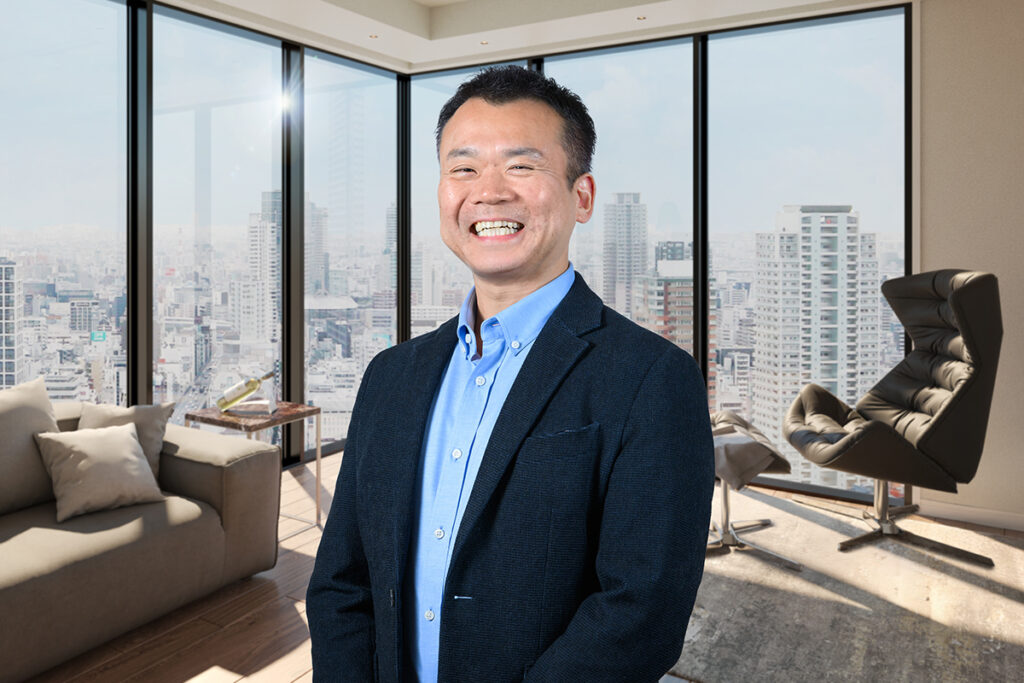
Tsuyoshi Hikichi has been running property management in Tokyo for 22 years, and almost all of his clients — 98%, he says — are overseas investors. When we sat down to talk about what actually trips people up, he didn’t start with taxes or paperwork. He started with a homeowners association meeting.
The day-to-day reality of remote ownership
Every condo building in Japan has a residents’ association, and once a year it holds a general meeting. Owners get the agenda ahead of time, the previous year’s minutes, maybe a proposal for a special levy to cover major repairs. All in Japanese, obviously, and all requiring some kind of response even though you’re in Singapore or Sydney or London and physically can’t be there.
This alone isn’t a crisis. But it’s one small thing among many, and Hikichi’s point was that this is really what managing property from abroad feels like: not one big problem, but a steady drip of smaller ones that need someone paying attention.
Most property managers in Japan built their business around Japanese owners, not people checking email at midnight from another time zone. Axios is unusual in that its whole client base skews foreign, which changes what the company has had to build — English reporting, different working hours, familiarity with the questions overseas owners actually ask.
There's an assumption that the main obstacle is language, and that's true but not in the way people expect.
Beyond translation: Navigating business culture
There’s an assumption that the main obstacle is language, and that’s true but not in the way people expect. Reading the documents is the easy part now — translation tools handle routine correspondence fine. What’s harder, Hikichi told us, is the “business customs and culture” needed to deal with everyone a management company relies on behind the scenes: contractors, building administrators, local government offices, tenants.
Business relationships in Japan don’t run on the same unspoken rules as they do elsewhere, and a contractor who feels a request wasn’t handled the right way might just quietly stop prioritizing your job. Nobody tells you that’s what happened. You just notice the repair took three weeks instead of one, or that a contractor who used to answer the phone stopped picking up.
A firm built around Japanese clients absorbs all of this without thinking about it. Translating that same judgment for a foreign client, in a way they can actually use, is a different skill entirely.
The hidden costs of a vacant unit
Then there’s the part that doesn’t show up in the marketing. Collecting rent and fixing things when they break is the visible job. Less visible:
- Tax notices that need answering.
- That homeowners association meeting that needs a proxy.
- A vacant unit that still needs someone to check on it so a leak doesn’t sit unnoticed for a month.
Hikichi was matter-of-fact about it — the costs don’t stop when a unit is empty. Taxes, homeowners association fees, utilities on what’s effectively a second home, all “even when it is vacant.” Management fees usually run 5% to 10% of rental income, and that number alone won’t tell you what happens during a vacancy.
So ask directly, before signing anything: what do I get charged during a vacancy, and does the fee change? Some companies adjust for it. Many don’t, and you find out the hard way.
What to actually look for in a property manager
I asked what he’d tell a foreign buyer to actually look for in a manager, expecting something about licensing. Instead he talked about how a manager reacts to being challenged.
“If you suggest ideas to a property manager to improve performance, but they refuse based on their experience or else, they are complacent,” he said. “Things are changing rapidly. What the manager must do is adapt to the current market or environment and just try without saying no.”
Property management in Japan runs on a lot of inherited habits. Things are done a certain way because that’s how they’ve always been done, not necessarily because it’s the best way. Short-term rental rules have shifted, tenant demographics have shifted, and the volume of foreign buyers has grown faster than a lot of firms have adjusted for. A manager who answers every suggestion with “that’s not how we do it” might not be wrong about any single case, but they’re probably not the one who’s going to catch a problem before you ask about it.
The client base breakdown
A simpler thing to check: what share of a firm’s clients are actually foreign. A company that’s mostly domestic can still do fine work, but the stuff overseas owners need, like English communication, reasonable response times across time zones, some fluency in the tax and remittance questions that come up, doesn’t happen automatically. Somebody has to have built it in on purpose.
The advantage of speed
Axios has also stayed small on purpose, and that’s worth weighing rather than assuming it’s a downside. For routine stuff, a bigger company’s scale is often genuinely useful. It’s the nonroutine moments — a tenant who’s gone quiet, an emergency repair, something that needs a decision today rather than next week — where a small team with short internal lines tends to just move faster. And in this business, speed is often the whole difference between something that gets fixed cleanly and something that turns into a heavy cost.

Tsuyoshi Hikichi
Managing Director of Axios Management and IREA, with over 22 years of experience advising international investors on acquiring, managing, and optimizing real estate assets in Japan.